
Emily Davis - "Coexistence in a Hierarchical Guild: behavioral, spatial, and trophic interactions among wolves, coyotes, and red foxes in the Greater Yellowstone Ecosystem"
"This funding directly supports DNA metabarcoding and remote camera analyses that are essential for linking spatial and dietary partitioning across the canid guild of the GYE. By enabling this work, the funding helps reveal the mechanisms that sustain multi-species carnivore assemblages in a system shaped by ecological interactions and persistent human presence, while also elevating the “underdogs” of the system—coyotes and red foxes—often overlooked yet critical to maintaining ecosystem structure, stability, and biodiversity alongside wolves."
Emily Davis
Ph.D. Student
2026 Recipient of the Biodiversity Institute Graduate Student Excellence Grant
Program in Ecology and Evolution
Graduate Advisor: Joe Holbrook
Background:
Trophic dynamics in the Greater Yellowstone Ecosystem have shifted over the past three decades following wolf reintroduction and increasing human presence on the landscape. This project examines how the current canid guild—wolves, coyotes, and red foxes—coexists within this dynamic system by quantifying how they partition space, time, and resources. To do this, we integrate GPS collar data across all three species with remote camera data, dietary DNA metabarcoding, human mobility data, and LiDAR-derived habitat structure. Combining these complementary datasets provides a more complete picture of how animals navigate competition, risk, and resource use, allowing us to identify the functional mechanisms that sustain diverse carnivore assemblages. This comprehensive approach addresses longstanding questions about trophic dynamics within the canid guild and informs how carnivore assemblages persist and adapt in human-influenced systems.
Goals:
-
Examine trophic dynamics within the Greater Yellowstone Ecosystem canid guild decades after wolf reintroduction and under ongoing human influence by quantifying spatial, temporal, and dietary niche partitioning among wolves, coyotes, and red foxes
-
Integrate advanced technologies—including LiDAR, human mobility data, and DNA metabarcoding—to expand inference on trophic interactions and identify the functional mechanisms that support diverse predator assemblages
-
Translate findings into outreach and communication materials that highlight the ecological importance of subordinate, often underrepresented carnivores and improve public understanding of carnivore interactions in human-influenced systems
Share This Page
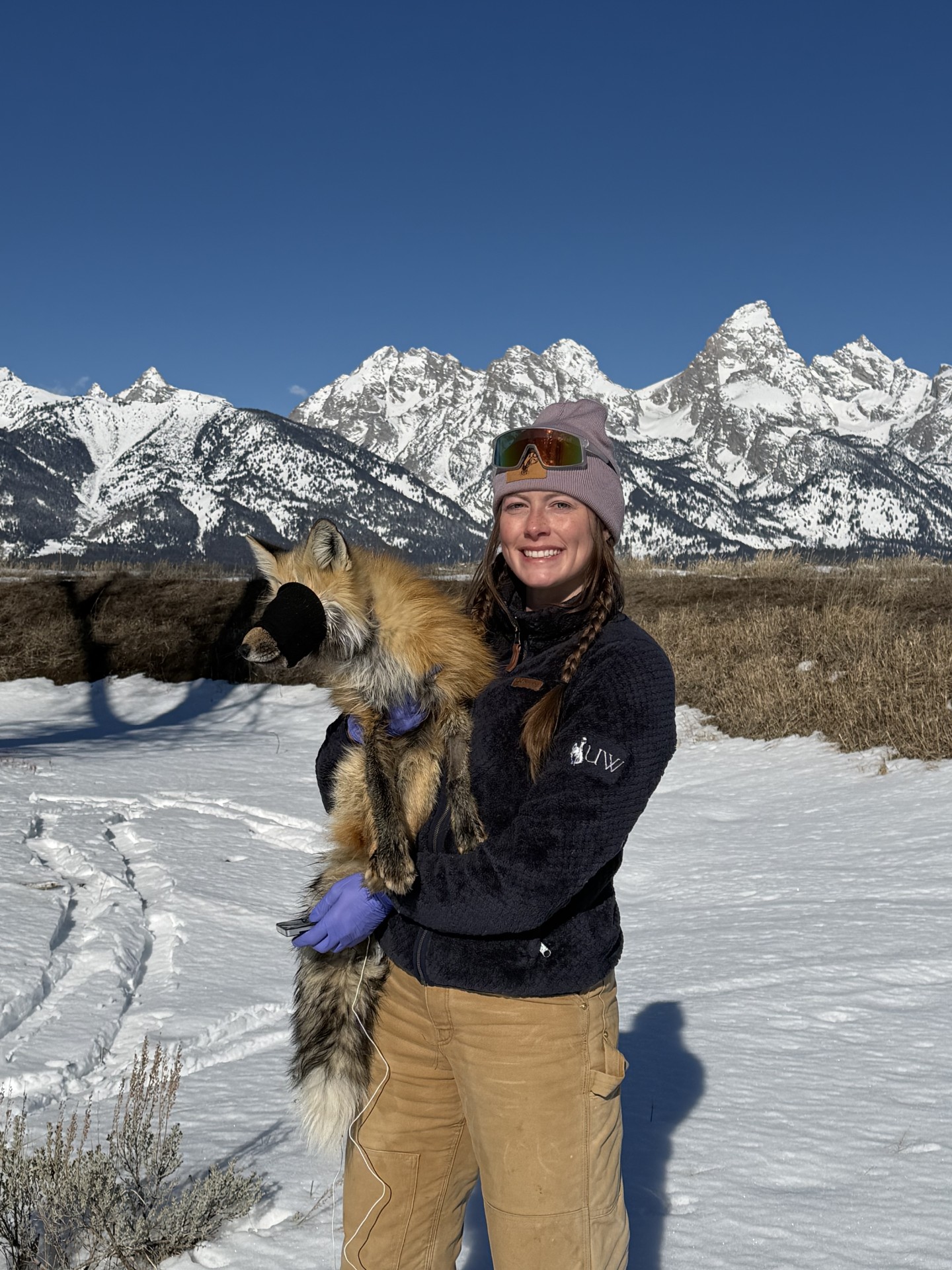
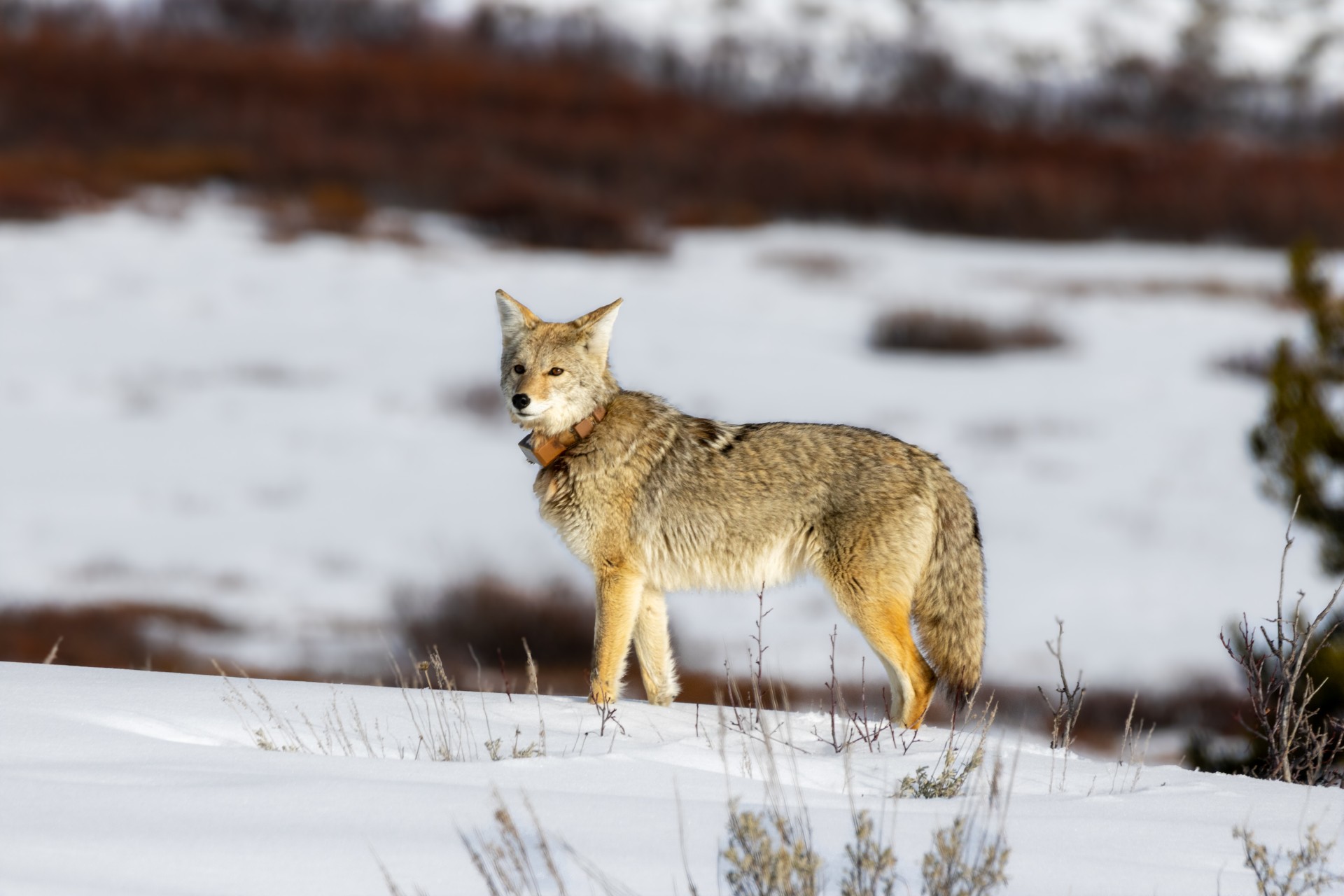
Collared coyote in Grand Teton National Park. Photo Credit: Austin Smith
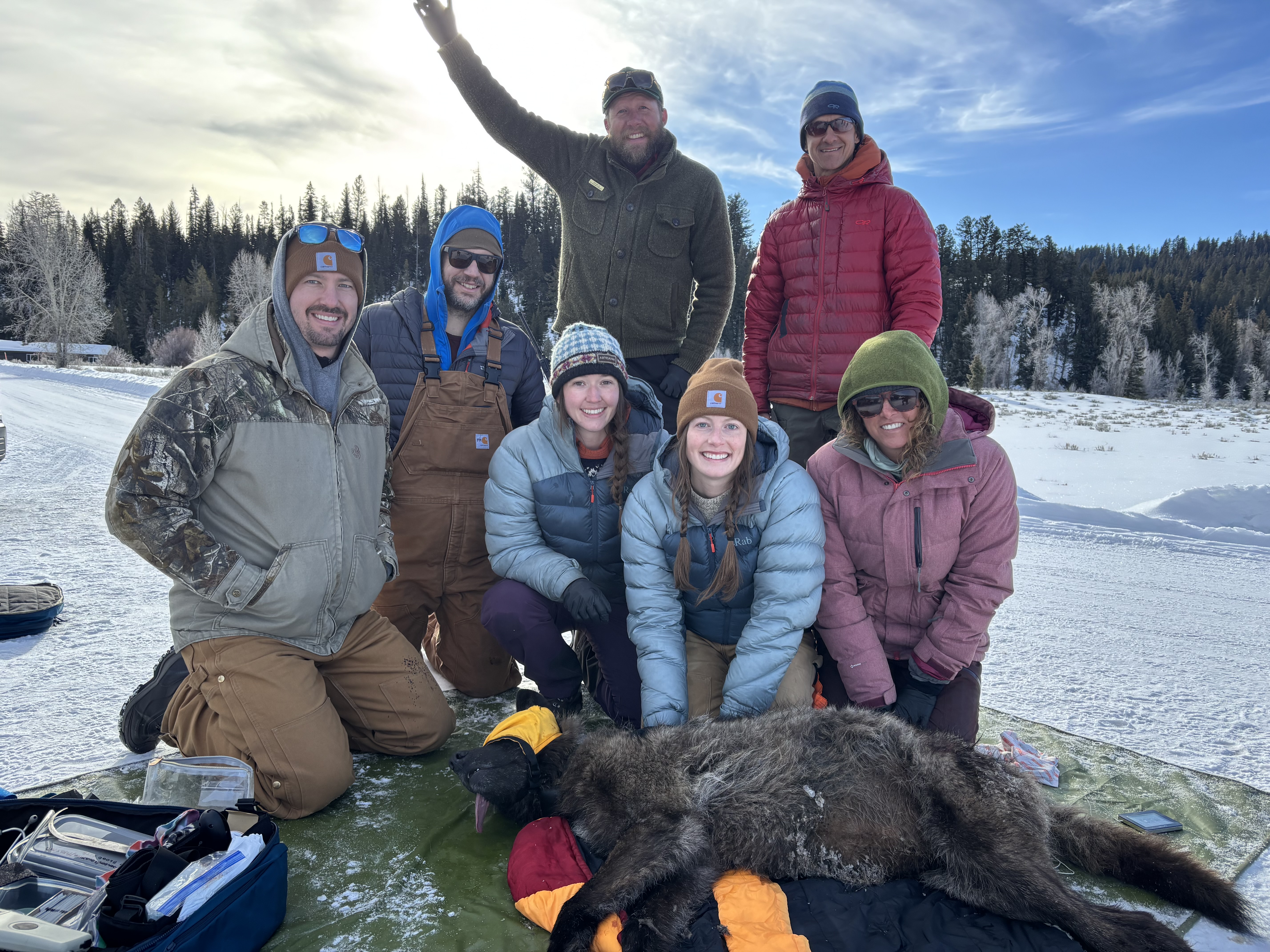
Research team during processing of a chemically immobilized, GPS-collared gray wolf in the Greater Yellowstone Ecosystem. (R–L): Dr. Joe Holbrook, Austin Smith, Ken Mills (standing; Wyoming Game and Fish Department), John Stephenson (standing; Grand Teton National Park), Jessica Bylin, Emily Davis (PhD Student), Lindsay Dreger. All animal capture and handling was conducted under appropriate state and federal research permits.
Research Highlights